Specifications
Surface Treatments
Certifications
- ISO 9001 - 2015 Certified
- PED 2014/68/EC
- NACE MR0175/ISO 15156-2
- NORSOK M-650
- DFAR
- MERKBLATT AD 2000 W2/W7/W10
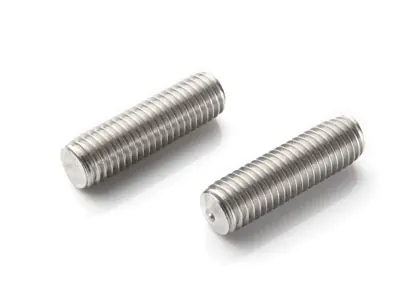
Nitronic 60 nuclear applications span reactor coolant pump bolting, valve-trim seats, control-rod-drive hardware, and Helicoil thread inserts in pressurized-water reactor (PWR) and boiling-water reactor (BWR) service. The anti-galling chemistry prevents the bolted-joint and valve-trim failures that cause unscheduled shutdowns. Used by ITNS-classified components where galling-induced leakage or stem-seizing would be safety-critical.
TorqBolt stocks Nitronic 60 (UNS S21800) at our Mumbai head office and Rajkot production plant. Each consignment ships with EN 10204 3.1 mill test certification by default and 3.2 dual-witnessed inspection (Lloyds, TUV, DNV, BV) on request. Contact info@torqbolt.com or +91-22-66157017 for sized stock and lead time.
Nuclear primary-loop hardware sees boric-acid borated water, radiation field, neutron embrittlement of mating components, and limited access for replacement. A galling failure on a control-rod-drive bushing or a reactor-coolant-pump shaft can require fuel-cycle shutdown and component replacement at multimillion-dollar cost. Nitronic 60 eliminates the galling failure mode, paying back orders-of-magnitude over the alloy cost premium.
Cr 16-18 / Mn 7-9 / Ni 8-9 / Si 3.5-4.5 / N 0.08-0.18 / C ≤0.10. See full element ranges with single and aggregate limits →
Yield 55 ksi (380 MPa) min, tensile 95 ksi (655 MPa) min, elongation 35% min (annealed). Hardness Rockwell B95-95 typical. See full mechanical specification with bar / forging / wire conditions →
Nitronic 60 threshold stress 50,000 psi+ per ASTM G98 vs 304/316L at 4,000-6,000 psi — 5 to 10× better galling resistance. See full ASTM G98 data and galling failure mechanism →
Solution anneal only at 1900-1950°F followed by water quench. No precipitation hardening response. See full heat treatment specification →
Matching filler ER218 per AMS 5847. GTAW, GMAW, and SMAW all qualified. No PWHT required for typical thicknesses. See full welding procedure →
Nitronic 60 wins for anti-galling at high temperature where 304/316L gall. Stellite is harder but brittle. vs 316L · vs Nitronic 50 · austenitic context →
For Nitronic 60 hardware specified for nuclear applications, Contact the TorqBolt QA-QC team at info@torqbolt.com or +91-22-66157017. We respond within 24 hours with sized stock availability, lead time, and EN 10204 3.1 / 3.2 MTC documentation samples.
Why Nitronic 60 for nuclear applications?
The anti-galling chemistry eliminates the dominant failure mode of 304 / 316L hardware in nuclear applications. Specifically the threshold galling stress per ASTM G98 is 5 to 10 times higher self-mated.
What forms are typically specified?
Fasteners (hex bolts, stud bolts, hex nuts), shafts, bushings, valve trim, sliding-contact components. See full fastener portfolio for the catalog overview.
What certification is required for nuclear applications?
Typically EN 10204 3.1 mill test certificate as standard, with 3.2 dual-witnessed inspection (Lloyds, TUV, DNV, BV) for safety-critical or regulatory-monitored components. NACE MR0175 compliance available where sour-service exposure is part of the envelope.
Alternative materials for nuclear applications?
Duplex 2205 (better chloride resistance, moderate galling), Inconel 625 (high-temperature corrosion at much higher cost), Stellite 6 (extreme galling at 15 to 25 times the cost). Nitronic 60 is the stainless-price-point anti-galling specification.