
Specifications
Surface Treatments
Certifications
- ISO 9001 - 2015 Certified
- PED 2014/68/EC
- NACE MR0175/ISO 15156-2
- NORSOK M-650
- DFAR
- MERKBLATT AD 2000 W2/W7/W10
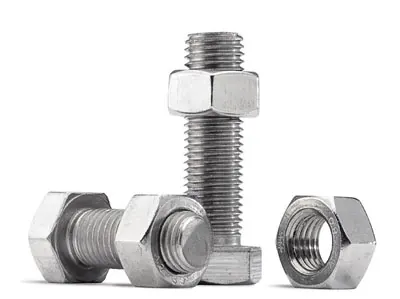
Stainless steel galling (also called cold welding, thread seizing, or stainless-on-stainless adhesive wear) is the dominant failure mode of 304 and 316L threaded fasteners and valve trim. It is NOT a corrosion failure - it is a metallurgical adhesion failure under sliding contact. Nitronic 60 (UNS S21800) was developed specifically to eliminate galling in austenitic stainless service through its high-Mn-Si-N alloying. Threshold galling stress per ASTM G98 is 5 to 10 times higher than 304 / 316L self-mated.
Galling is the cold-welding of metal surfaces under sliding contact. When two austenitic stainless surfaces (304 on 304, 316L on 316L, 304 on 316L) slide against each other under load, the surface oxide breaks down and virgin metal at the contact spots adhesively bonds. The bonded spot tears as motion continues, ripping material from one surface and depositing it on the other. The result: torn threads on bolts, scored valve stems, seized fasteners that cannot be removed without destruction.
Three dominant locations: (1) bolt threads during makeup-breakout cycles - the bolt cannot be reused after one disassembly because threads tore; (2) valve stems in gate valves under pressure cycling - the stem cold-welds to the seat insert and the valve locks; (3) sliding-contact mechanisms like screw conveyor flights against trough walls, pump shafts against seal carriers, helicoil thread inserts during installation.
304 and 316L have low stacking-fault energy and a thin chromium-oxide surface layer that breaks down easily under contact pressure. Once the oxide breaks, austenite is exposed and cold-welds readily. Nickel alloying in 316L does not help - the failure is governed by austenite crystallography and surface oxide stability, not by chromium-nickel balance.
Nitronic 60 (UNS S21800) adds 7-9% manganese, 3.5-4.5% silicon, and 0.08-0.18% nitrogen to the austenitic chemistry. Silicon promotes a tenacious surface oxide that resists film breakdown under contact pressure. Manganese reduces stacking-fault energy enough to favor planar slip without exposing virgin metal. Nitrogen solid-solution strengthening raises the work-hardening threshold. The combination yields a self-mated threshold galling stress of 350-500 MPa per ASTM G98 - many times higher than 316L's 35-70 MPa.
Threshold galling stress under self-mated buttonon-block test per ASTM G98: Nitronic 60 self-mated: 350-500 MPa; 304 self-mated: 35-70 MPa; 316L self-mated: 35-70 MPa; Nitronic 60 paired against 304/316L: 175-275 MPa (still many times higher than self-mated 316L). See the galling resistance page for the detailed comparative dataset.
Thread galling (the search term buyers use most often) describes the bolt-thread seizure failure. Self-mated 304 or 316L bolt threads gall within 1-3 makeup-breakout cycles, especially without anti-seize. Nitronic 60 threads installed dry typically tolerate 50+ cycles without galling. The cost saving over anti-seize compound use plus the elimination of torque-scatter from lubricant contamination is the reason Nitronic 60 dominates anti-galling fastener service.
Replace 304 / 316L with Nitronic 60 in: hex bolts, stud bolts, hex nuts, threaded rod, valve stems, Helicoil thread inserts, dowel pins, bushings, pump shafts, and screw conveyor flights.
For Nitronic 60 hardware that eliminates galling at the chemistry level, Contact the TorqBolt QA-QC team at info@torqbolt.com or +91-22-66157017. We respond within 24 hours with sized stock availability, lead time, and EN 10204 3.1 / 3.2 MTC documentation samples.
What is galling in stainless steel?
Adhesive cold-welding between sliding stainless surfaces under contact pressure. The surface oxide breaks down, virgin metal exposes, and the metal cold-welds to its mating surface. As sliding continues the bonded spot tears, ripping material from one surface and depositing it on the other. The result is torn threads, scored stems, and seized assemblies.
Is galling the same as corrosion?
No. Galling is a metallurgical adhesion failure under sliding contact, not a chemical attack. Galled surfaces show torn material transfer not pitting or crevice attack. Galling can occur in completely dry service with no corrosion at all.
Does anti-seize prevent stainless galling?
Partially. Anti-seize compounds (nickel, copper, or molybdenum disulfide based) reduce galling probability on 304 / 316L but introduce torque-scatter, contaminate the assembly, and degrade in service. Nitronic 60 lets you install dry - no anti-seize needed for the anti-galling property.
Is Nitronic 60 immune to galling?
Highest galling resistance among austenitic stainless steels. Not immune - under extreme contact stress (above ~500 MPa per ASTM G98 self-mated) some galling will eventually occur. For extreme service consider Stellite 6 hard-facing on the critical sliding surface.
What is the galling compatibility of stainless on aluminum?
Stainless-on-aluminum galls badly. The aluminum is much softer than stainless and tears severely under contact. Nitronic 60 against aluminum is better than 316L against aluminum but still not recommended for high-load sliding contact. Use a hardened mating insert (Stellite, anodized aluminum, or PEEK liner).