

Specifications
Surface Treatments
Certifications
- ISO 9001 - 2015 Certified
- PED 2014/68/EC
- NACE MR0175/ISO 15156-2
- NORSOK M-650
- DFAR
- MERKBLATT AD 2000 W2/W7/W10
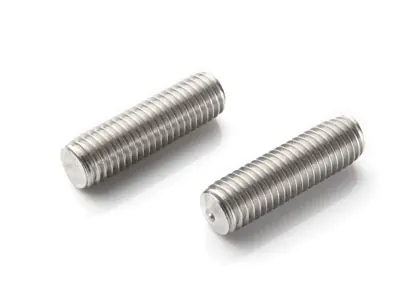
Nitronic 60 Helicoil thread inserts (UNS S21800) are the anti-galling specification for tapped-hole reinforcement and thread repair in austenitic stainless service. Conventional 304 / 316L Helicoil inserts gall during installation against 304 / 316L parent material under the cold-welding adhesion failure mode. Nitronic 60 inserts install dry without anti-seize and tolerate 50+ reuse cycles without scoring the tap-driver, the parent material, or the bolt that engages the rebuilt thread. The high-Mn-Si-N anti-galling chemistry raises the threshold galling stress per ASTM G98 by 5 to 10 times over 304 / 316L self-mated. TorqBolt stocks Nitronic 60 Helicoils in UNF, UNC, and metric series from #4-40 / M3 through 1-1/4 inch / M30, free-running and screw-locking patterns.
Per info@torqbolt.com or +91-22-66157017 for a sized stock quote and lead time. Each consignment ships with EN 10204 3.1 mill test certification by default and 3.2 dual-witnessed inspection (Lloyds, TUV, DNV, BV) on request.
Helicoil inserts are coiled wire-thread inserts installed into a slightly oversized tapped hole to provide a hardened thread surface for a standard machine bolt. The insert wire is driven into the tapped hole and seats with both ID and OD engaging threaded surfaces under sliding contact. THAT sliding contact is where conventional stainless Helicoils fail.
Thread series, lengths, and patterns stocked from inventory or quoted on a short lead time:
| Series | Size Range | Lengths (× nominal D) | Pattern |
|---|---|---|---|
| UNC inch | #4-40 through 1-1/4 inch | 1D, 1.5D, 2D, 2.5D, 3D | Free-running, screw-locking |
| UNF inch | #4-48 through 1-1/4 inch | 1D, 1.5D, 2D, 2.5D, 3D | Free-running, screw-locking |
| Metric coarse | M3 through M30 | 1D, 1.5D, 2D, 2.5D, 3D | Free-running, screw-locking |
| Metric fine | M5 through M30 | 1D, 1.5D, 2D, 2.5D, 3D | Free-running, screw-locking |
| NPT pipe thread | 1/16 NPT through 1-1/2 NPT | Per NPT series | Free-running |
Diamond-cross-section wire profile per Helicoil standard, which produces a triangular thread cross-section that distributes bolt-engagement load across the full length of the insert. Tang-and-notch installation drives standard across all sizes.
Two pattern variants stocked, picked by service:
For maximum locking force specify the maximum-grip variant; for nominal locking specify the minimum-grip variant. Both are stocked in Nitronic 60 wire.
Wire feedstock and finished inserts manufactured to the following standards bodies:
| Standard | Scope | Applicable to |
|---|---|---|
| ASTM A580 | Stainless wire (UNS S21800) | Helicoil wire feedstock |
| AMS 5847 | Aerospace wire (ER218 / UNS S21880 cast variant) | Aerospace-quality wire |
| MIL-I-8846 | Insert, screw-thread, helical coil | Military and aerospace specification |
| NASM 8846 | National Aerospace Standard for Helicoil inserts | Aerospace replacement for MIL-I-8846 |
| NACE MR0175 / ISO 15156-3 | Sour-service material qualification | Annealed temper inserts in subsea wellhead service |
Material certification per EN 10204 3.1 by default; EN 10204 3.2 dual-witnessed third-party inspection (Lloyds, TUV, DNV, BV) available on request for aerospace, nuclear, and oilfield-critical orders. NACE MR0175 sour-service certification statement available for oilfield purchase orders.
Installation sequence is identical to conventional Helicoil but the Nitronic 60 wire eliminates the dry-installation galling risk. Standard procedure:
Dominant industry envelopes for Nitronic 60 Helicoil inserts:
Common Helicoil insert materials and where Nitronic 60 fits:
| Material | Galling Resistance | Corrosion | Cost | Best Use |
|---|---|---|---|---|
| 304 stainless wire | Poor (galls under installation) | Good general | 1x | Low-cycle, low-vibration |
| 316 stainless wire | Poor (galls under installation) | Excellent in chloride | 1.2x | Marine corrosion priority |
| 17-4 PH stainless wire | Moderate (higher hardness) | Good | 2x | High-load, single-install |
| Nitronic 60 wire (UNS S21800) | Excellent (5-10x vs 304/316L) | Good general | 2x | Repeat-cycle, anti-galling priority |
| Inconel 718 wire | Excellent | Outstanding (nickel) | 8x | High-temperature aerospace |
| Phosphor bronze wire | Excellent | Moderate | 1.5x | Non-magnetic, soft parent |
For most industrial repeat-cycle service Nitronic 60 is the engineering compromise, providing the anti-galling benefit of nickel-superalloy inserts at a stainless price point. See galling resistance for the underlying ASTM G98 data and Nitronic 60 vs 316L for a full material comparison.
Buyers of Nitronic 60 Helicoil inserts typically also need matching anti-galling fasteners:
For Nitronic 60 Helicoil thread inserts in any size from #4-40 / M3 through 1-1/4 inch / M30, free-running or screw-locking, Contact the TorqBolt QA-QC team at info@torqbolt.com or +91-22-66157017. We respond within 24 hours with sized stock availability, lead time, and EN 10204 3.1 / 3.2 MTC documentation samples.
What is a Helicoil thread insert?
A coiled-wire thread insert installed into a slightly oversized tapped hole, providing a hardened thread surface for a standard machine bolt. Used to repair stripped threads, reinforce tapped holes in soft parent materials (aluminum), or provide a permanent anti-galling thread surface in stainless parent material.
Why use Nitronic 60 Helicoil inserts instead of 304 or 316L?
304 and 316L Helicoils gall during installation against the tapped-hole walls. The cold-welding adhesion mechanism scores both surfaces. Nitronic 60 wire chemistry (high Mn-Si-N) eliminates this failure mode, allowing dry installation and 50+ reuse cycles versus 1-3 cycles for 304 / 316L.
What sizes are stocked?
UNC, UNF, and metric coarse / fine series from #4-40 / M3 through 1-1/4 inch / M30. Lengths 1D, 1.5D, 2D, 2.5D, and 3D. Free-running and screw-locking patterns. Custom NPT pipe-thread inserts on a short lead time.
Are Nitronic 60 Helicoils NACE MR0175 compliant?
Yes, in the solution-annealed condition (95 HRB max hardness). Cold-worked-temper inserts may exceed the hardness limit and require end-user spec endorsement. See NACE MR0175.
Can Nitronic 60 Helicoils be reused?
Yes. The anti-galling chemistry tolerates 50+ install-remove cycles without scoring the insert wire surface or the tapped-hole walls. 304 / 316L Helicoils typically tolerate 1-3 cycles.
What is the difference between free-running and screw-locking Helicoils?
Free-running has uniform thread coils with no locking grip on the bolt. Screw-locking has one or more deformed coils that grip the bolt under controlled friction, providing vibration-loosening resistance. Both are stocked in Nitronic 60 wire.
Do I need anti-seize compound?
No. Nitronic 60 wire installs dry. Anti-seize introduces torque-scatter, contaminates the assembly, and may degrade in service. The dry-installation property is one of the key reasons buyers specify Nitronic 60 over 304 / 316L Helicoils.
What is the installation tool?
Standard tang-drive Helicoil installation tool for the matching thread series. After installation a tang-break tool snaps off the installation tang at the breakoff notch. No special Nitronic-60-specific tooling required.