

Specifications
Surface Treatments
Certifications
- ISO 9001 - 2015 Certified
- PED 2014/68/EC
- NACE MR0175/ISO 15156-2
- NORSOK M-650
- DFAR
- MERKBLATT AD 2000 W2/W7/W10

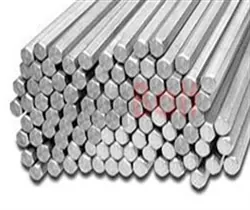
Nitronic 60 density is 7.62 grams per cubic centimeter (0.275 pounds per cubic inch). This is essentially identical to 304 / 316L stainless density (8.00 g/cc) with a minor reduction due to the higher manganese and silicon content. Density is used in weight calculations for stock estimating, freight forecasting, and component-mass design.
TorqBolt stocks Nitronic 60 (UNS S21800) at our Mumbai head office and Rajkot production plant. Each consignment ships with EN 10204 3.1 mill test certification by default and 3.2 dual-witnessed inspection (Lloyds, TUV, DNV, BV) on request. Contact info@torqbolt.com or +91-22-66157017 for sized stock and lead time.
The density value is constant within engineering tolerance at room temperature; for elevated-temperature calculations apply the linear thermal-expansion correction of 16.2 x 10^-6 per degree C (room-temperature to service-temperature).
Comparison to neighboring grades: 304 = 8.00 g/cc, 316L = 7.96 g/cc, Nitronic 50 = 7.86 g/cc, Nitronic 60 = 7.62 g/cc. The slightly lower density of Nitronic 60 reflects its higher Mn and Si content versus the 300-series.
Weight per length: 1 inch diameter round bar = 1.62 lb/ft (2.41 kg/m). 1/2 inch round = 0.41 lb/ft. Use these for quick stock-weight estimates.
For thermal-expansion correction see thermal expansion and for related mechanical-physical properties see mechanical properties.
Cr 16-18 / Mn 7-9 / Ni 8-9 / Si 3.5-4.5 / N 0.08-0.18 / C ≤0.10. See full element ranges with single and aggregate limits →
Solution-annealed and cold-worked condition mechanical properties per ASTM A276, ASTM A479, and AMS 5848:
| Property | Solution Annealed | Cold-Worked HS |
|---|---|---|
| Yield Strength (0.2% offset) | 380 MPa (55 ksi) min | 620 MPa (90 ksi) min |
| Tensile Strength | 655 MPa (95 ksi) min | 860 MPa (125 ksi) min |
| Elongation (in 4D) | 35% min | 15% min |
| Hardness | 95 HRB max (~210 HB) | 30 HRC max |
| Impact (Charpy V at -196 C) | 54 J min | - |
| Density | 7.62 g/cc | 7.62 g/cc |
See yield strength, tensile properties, hardness, and density for cold-work curves and temperature-derated allowables.
The primary reason buyers specify Nitronic 60. Threshold galling stress per ASTM G98 button-on-block self-mated test:
| Self-Mated Pair | Threshold Galling Stress (ASTM G98) | Relative |
|---|---|---|
| 304 / 304 | 35 to 70 MPa | 1x baseline |
| 316L / 316L | 35 to 70 MPa | 1x baseline |
| Nitronic 50 / Nitronic 50 | 175 to 275 MPa | 3-5x |
| Nitronic 60 / Nitronic 60 | 350 to 500 MPa | 5-10x |
Where threshold stress exceeds the applied contact stress, galling does not initiate. For 316L bolted joints at typical preload, contact stress routinely exceeds 70 MPa, so galling DOES initiate. Nitronic 60 raises the threshold above typical preload contact stress, so galling does NOT initiate. See galling resistance and galling failure mechanism for the full mechanism.
Solution anneal only at 1900-1950°F followed by water quench. No precipitation hardening response. See full heat treatment specification →
Matching filler ER218 per AMS 5847. GTAW, GMAW, and SMAW all qualified. No PWHT required for typical thicknesses. See full welding procedure →
Nitronic 60 wins for anti-galling at high temperature where 304/316L gall. Stellite is harder but brittle. vs 316L · vs Nitronic 50 · austenitic context →
For Nitronic 60 stock with verified density certification, Contact the TorqBolt QA-QC team at info@torqbolt.com or +91-22-66157017. We respond within 24 hours with sized stock availability, lead time, and EN 10204 3.1 / 3.2 MTC documentation samples.
What is the Nitronic 60 density?
See the values in the table above. The density of Nitronic 60 is one of the property metrics that distinguishes it from 304 / 316L.
Why does Nitronic 60 density matter?
For design engineering decisions, density directly affects component sizing, service envelope, and material substitution choices.
How is density verified?
Standard test methods per ASTM. Mill test certificate (EN 10204 3.1) reports the measured value for the heat lot.
What is the temperature dependence?
Nitronic 60 retains useful properties from -196 C cryogenic to ~815 C upper service temperature. Above 540 C check sigma-phase precipitation envelope.