
Specifications
Surface Treatments
Certifications
- ISO 9001 - 2015 Certified
- PED 2014/68/EC
- NACE MR0175/ISO 15156-2
- NORSOK M-650
- DFAR
- MERKBLATT AD 2000 W2/W7/W10
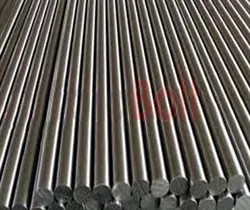
Nitronic 60 cryogenic service (UNS S21800) hardware for LNG, liquid-nitrogen, and liquid-helium handling equipment. The austenitic FCC matrix is stable to -196 C without austenite-to-martensite transformation, retaining ductility and impact toughness throughout the cryogenic envelope. Charpy V impact at -196 C is 54 J minimum. Anti-galling chemistry adds the secondary benefit of preventing thread galling at flange-joint installation.
TorqBolt stocks Nitronic 60 (UNS S21800) at our Mumbai head office and Rajkot production plant. Each consignment ships with EN 10204 3.1 mill test certification by default and 3.2 dual-witnessed inspection (Lloyds, TUV, DNV, BV) on request. Contact info@torqbolt.com or +91-22-66157017 for sized stock and lead time.
Cryogenic-temperature stainless steels must retain ductility and impact toughness at LNG temperature (-162 C) and liquid-nitrogen temperature (-196 C). 304 and 316L are both rated for cryogenic service but suffer strain-induced martensitic transformation under heavy cold work, which embrittles. Nitronic 60 austenite is more stable, retaining FCC structure under cold work, preserving ductility at cryogenic temperatures.
Cr 16-18 / Mn 7-9 / Ni 8-9 / Si 3.5-4.5 / N 0.08-0.18 / C ≤0.10. See full element ranges with single and aggregate limits →
Yield 55 ksi (380 MPa) min, tensile 95 ksi (655 MPa) min, elongation 35% min (annealed). Hardness Rockwell B95-95 typical. See full mechanical specification with bar / forging / wire conditions →
Nitronic 60 threshold stress 50,000 psi+ per ASTM G98 vs 304/316L at 4,000-6,000 psi — 5 to 10× better galling resistance. See full ASTM G98 data and galling failure mechanism →
Solution anneal only at 1900-1950°F followed by water quench. No precipitation hardening response. See full heat treatment specification →
Matching filler ER218 per AMS 5847. GTAW, GMAW, and SMAW all qualified. No PWHT required for typical thicknesses. See full welding procedure →
Nitronic 60 wins for anti-galling at high temperature where 304/316L gall. Stellite is harder but brittle. vs 316L · vs Nitronic 50 · austenitic context →
For Nitronic 60 hardware specified for cryogenic service, Contact the TorqBolt QA-QC team at info@torqbolt.com or +91-22-66157017. We respond within 24 hours with sized stock availability, lead time, and EN 10204 3.1 / 3.2 MTC documentation samples.
Why Nitronic 60 for cryogenic service?
The anti-galling chemistry eliminates the dominant failure mode of 304 / 316L hardware in cryogenic service. Specifically the threshold galling stress per ASTM G98 is 5 to 10 times higher self-mated.
What forms are typically specified?
Fasteners (hex bolts, stud bolts, hex nuts), shafts, bushings, valve trim, sliding-contact components. See full fastener portfolio for the catalog overview.
What certification is required for cryogenic service?
Typically EN 10204 3.1 mill test certificate as standard, with 3.2 dual-witnessed inspection (Lloyds, TUV, DNV, BV) for safety-critical or regulatory-monitored components. NACE MR0175 compliance available where sour-service exposure is part of the envelope.
Alternative materials for cryogenic service?
Duplex 2205 (better chloride resistance, moderate galling), Inconel 625 (high-temperature corrosion at much higher cost), Stellite 6 (extreme galling at 15 to 25 times the cost). Nitronic 60 is the stainless-price-point anti-galling specification.